
2024: My Improvised Year In Review
18/December/2024
Whose Teacher Is It Anyway?
22/January/2025
New year, new you, same old improv? Of course not, improv is the art of spontaneity and no two shows are ever the same. But maybe the teachers are?
Hear me out.
Festivals and retreats are some of the highlights of the improv scene. You get to immerse yourself in a location home or abroad, see lots of shows and take workshops. (Unless you are the type of festival goer who turns up to do your show and not watch anything else. Don’t be those people). Not only is it a wonderful opportunity to perform to a fresh audience, but also to gain the experience of workshops and shows from improvisers you may not have experienced before.
However, it has emerged in recent years that its not always the case.
Improv Then And Now
Let’s jump back in time to before the pandemic. Festivals can and do look different depending on what side of the pond you are on. US festivals have easier access to known and established improv hub across the country. Europe and beyond is a little different. (I can’t speak to non-US continents beyond Europe in this article). It was always a big deal having big name teachers visit Europe from the US and they became “headliners” by default. However, this sometimes felt like it was casting a bit of a shadow on non-US teachers at times, and often unfairly too.
Then the pandemic hit, and the #MeToo and Black Lives Matter movements gained momentum, and ultimately many big name theatres in the US started to close. This led to the rise of the Indie improv theatre. The European scene went through a re-shuffle too but remained fairly consistent with more theatres and schools growing and emerging. European improv began to shine in a way that it hadn’t before. And this was reflecting in festival and retreat line ups. Big name European teachers were becoming household names, in improv circles anyway. This shake-up was hugely positive for indigenous improv to emerge, and improvisers to find their personalities and styles beyond a traditional largely US influence.
But now we face a new challenge on the festival and retreat circuit. Repetition. It’s not uncommon now to see European festivals and retreats with similar teaching line ups. We have moved from putting one batch of teachers on pedestals, to another. The difference being the accents.
Is this a bad thing? Yes and no. Is it a teacher problem? Definitely not. It comes down to how we programme and produce these events. As a festival and retreat organiser myself, I know only too well the painful diligence required to programme a line up fairly from both an artistic and economic perspective. It’s hard not to be tantalised by the opportunity to have a teaching hero, or a friend, or flavour of the month in the line-up. Organisers will often experience more Improvisers than opportunities reaching out to express interest, or if you have an application system, you will have to turn away a lot of improvisers, and there can be the odd few who don’t take rejection well. Not to mention the turmoil or having to reject applicants.
The New Perils of Programming Faculty
So what is the problem?
We are at risk of having history repeat itself. As event organisers we need to give real consideration to how we provide opportunity to teachers, particularly the lesser known teachers. Something, we were all at a point in our journey. When I think about the life changing moments in courses and workshops over the years, they weren’t always in household name teacher workshops. Which leads on to the need to ask ourselves some hard questions:
- What are we doing to cultivate emerging and unknown teachers?
- Is our selection process fair and unbiased?
- What social barriers for teachers are we enabling or combatting?
- Are we hosting teachers who have taught at a number of other festivals only recently?
- How are we balancing that with giving opportunities to others?
- Are we part of decision making authorities selecting ourselves to teach?
- Are we dominating the performing line-up?
A recent conversation with a UK based festival enlightened me to their system of selecting teachers. They had a panel where there were unbiased parties involved in the decision making. Their commitment to transparency and fairness was admirable. I’m sure they still faced challenges with the process but to be able to stand over that process while elevated the art form is to be commended.
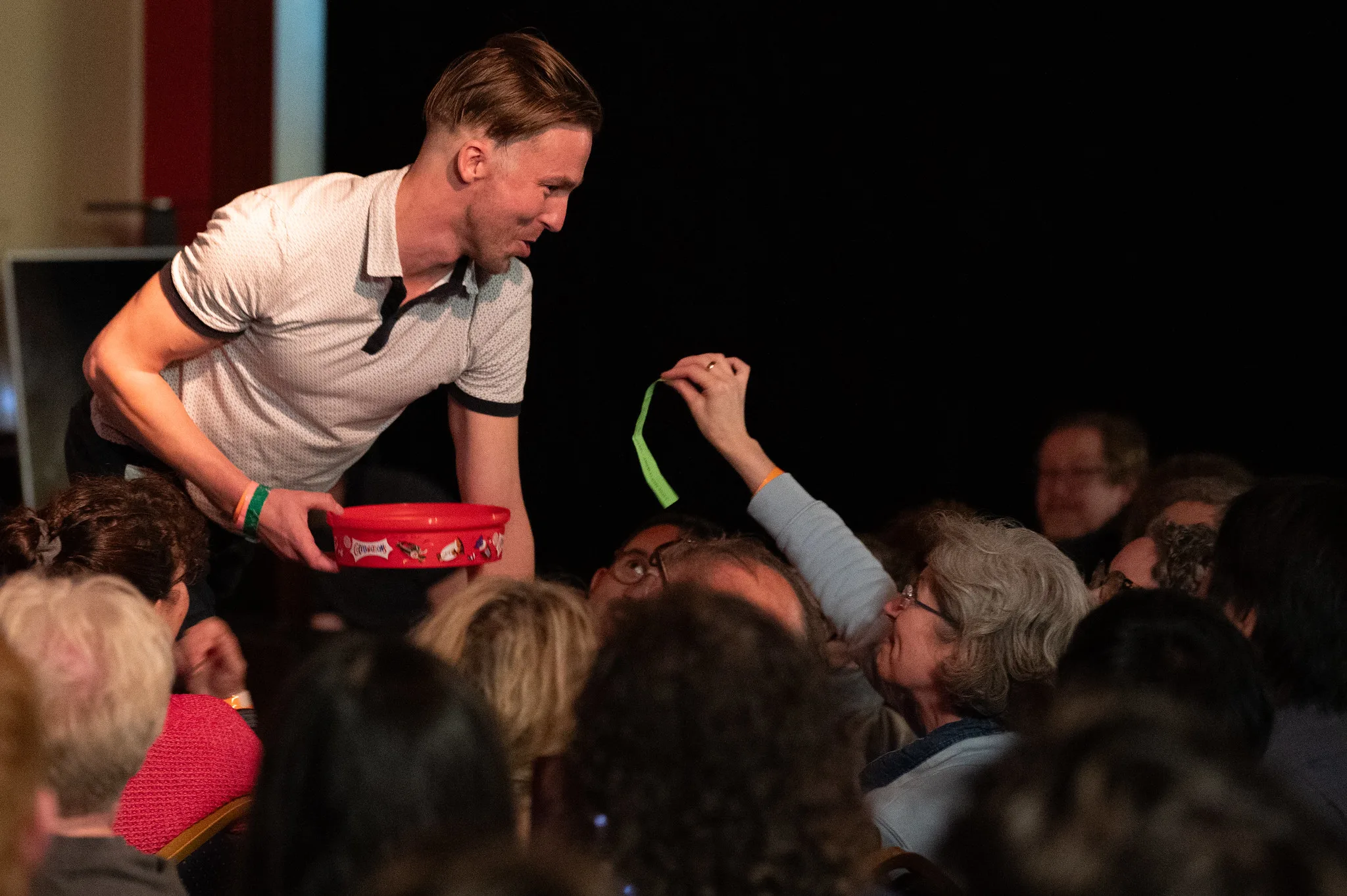
Improv Fest Ireland 2024. Photo: Dean Ben Ayre
In terms of my own festival, we moved away from an application model for a variety of reasons a few years ago. There are a few criteria we look at when selecting teachers which also includes reviewing if the person has performed previously at the festival so we can get a flavour of them on stage:
- Diversity and representation
- How much teaching has this person done internationally over the past 6 months and is there a risk of over-exposure?
- Will they embrace the spirit of the festival and watch shows, hang out with other improvisers?
- Are there barriers to teaching that this person may be facing be it large or small that we can help support?
- Is the person offering something different?
Of course this is not a perfect approach either but I am proud that we have had some great teachers over the years and given teaching opportunities where they may not have previously existed.
For a few years of the festival, I ran a “Be The Teacher” option for someone who wants to get in to teaching. The person would shadow my own classes and I would help them prepare their own workshop which would scheduled at the festival. While this was a a great way to aid local improvisers, its biggest drawback was that it didn’t help anyone outside of Ireland where I am based. It is something I would like to expand internationally in the future.
So how does your festival/event select teachers?